

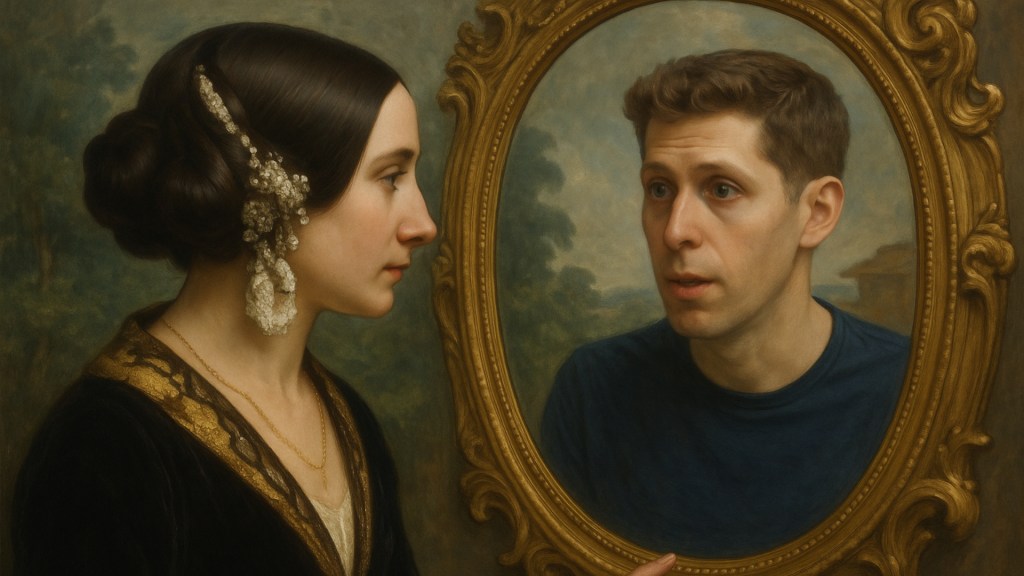
A step‑by‑step intro to using ChatGPT with Semkiw’s method
If you’re new to this field, here’s the promise and the guardrail in one line: AI can speed up the work, not replace the wisdom. We’ll use ChatGPT—specifically the Deep Research capability—to help you organize clues, find sources, and generate leads. The structure we’ll use is adapted from Dr. Walter Semkiw’s principles of reincarnation (often summarized as “Ten Points”)—a practical way to assess cases with consistency: facial resemblance; talent and personality continuities; childhood memories; physical signs (birthmarks/defects); geographic memory; xenoglossy; soul groups/relationship renewal; planned lifetimes; changes across religion/nationality/gender; and spirit‑guide/intuition factors.
Why Deep Research? OpenAI’s Deep Research is a web‑capable mode that plans, searches, and compiles findings into referenced outputs—ideal for complex, source‑heavy tasks like case groundwork. (OpenAI)
What you’ll need (beginner setup)
- ChatGPT with Deep Research enabled. Use it to:
- Draft structured prompts,
- Search for primary/secondary sources,
- Produce checklists and scorecards aligned to Semkiw’s points. (OpenAI)
- A basic “case binder.” Start a simple folder with:
- A one‑pager case summary,
- A running evidence log (date / source / claim / confidence),
- Images you’re allowed to use (portraits, family photos). For safe image sourcing, start with Wikimedia Commons, Library of Congress, or Smithsonian/National Portrait Gallery Open Access.
- Free evidence sources you can query today:
- UVA Division of Perceptual Studies (DOPS) primers on children’s memories, birthmarks, xenoglossy;
- FamilySearch (free genealogy records);
- Portrait collections at the Library of Congress and the National Portrait Gallery. (UVA School of Medicine)
Privacy tip: Decide upfront what you’ll share publicly. Review data control options in ChatGPT and avoid uploading sensitive info you don’t own the rights to. (OpenAI Help Center)
Step 1 — Make a “Case One‑Pager”
This keeps your process focused. Capture only what you actually know:
- Who/What: memories, dreams, regressions, impressions
- When/Where: dates, eras, locations, landmarks
- Body/Evidence: birthmarks, phobias, innate skills
- People: names, relationships, soul‑group hunches
- Media: relevant photos/portraits (with links)
Beginner prompt (paste into ChatGPT):
“Summarize this case into a one‑page brief for investigation. Organize by: memories (verbatim), locations/time, physical signs, talents/behaviors, relationships, and media. Then list uncertainties and questions I must verify in public records.”
Why it matters: Semkiw’s framework values specifics that can be checked—dates, places, relationships, and physical continuities. UVA’s research also starts from childhood statements and verifiable detail, not vague impressions.
Step 2 — Anchor to Semkiw’s “Ten Points” (the beginner’s version)
Use this simplified checklist, adapted from Semkiw’s principles and classic research findings:
- Early Life Memories: specific, consistent statements—ideally from young children.
- Factual Matchability: names/places/events that can be verified.
- Physical Signs: birthmarks/defects that plausibly correspond to a prior life’s injuries.
- Facial Architecture: structural resemblance across lifetimes (bone structure, proportions).
- Talent & Personality Continuities: prodigy‑level skills, persistent interests, or temperaments.
- Phobias/Behaviors: especially when they plausibly track a prior death circumstance.
- Geographic Memory / Draw: instinctive navigation or emotional pull to places never visited.
- Soul Groups / Relationship Renewal: recurring cohorts (family/friends) across lives.
- Life‑Plan / Intermission Clues: announcing dreams, pre‑birth planning themes.
- Xenoglossy / Language: unlearned language ability or knowledge.
Beginner prompt:
“Using this case one‑pager, evaluate it against Semkiw‑style principles (10 points above). Create a table with: Principle | What We Have | What’s Missing | 0–10 Score | Specific Next Step.”
Step 3 — Use Deep Research to pull sources you can actually check
Ask ChatGPT (Deep Research) for targeted sources and queries rather than generalities:
- For childhood memory claims:
“Find UVA DOPS articles on children who report past‑life memories, and summarize patterns I should look for (age of onset, verification methods).” - For physical signs (birthmarks/defects):
“Locate the Stevenson publications (PDFs or UVA pages) that summarize birthmark correlations and how they were evaluated.” - For xenoglossy:
“Point me to Stevenson’s xenoglossy monographs and any critical/linguistic perspectives for balanced review.” - For portraits/visuals:
“List open‑access portrait repositories for [era/region] (LOC, National Portrait Gallery, Wikimedia Commons), including rights pages.” - For genealogy/records:
“Suggest specific FamilySearch collections likely to include [country/period] vital records; include exact collection names/links.” (Suggested Start: FamilySearch)
Pro tip: Keep your evidence log in Google Sheets, and remain the data tight. For each new source: date, URL, exact quote/claim, and how it maps to a principle (e.g., “Phobias” or “Geographic Memory”). That’s how your narrative stays disciplined.
Step 4 — Build a first set of candidates (and rule most of them out)
Once Deep Research surfaces names, portraits, or locations that plausibly align with your case:
- Ask AI to cluster candidates by fit:
- “Group prospects by strength across the Ten Points. Provide the top 3 and the reason each might be the same soul.”
- Have AI argue against the match:
- “List the best counter‑arguments (confounds, coincidental resemblance, poor documentation) and how to test them.”
- Run a simple Go/No‑Go review:
- If you don’t have 3–4 independent lines (e.g., memory specifics + location consistency + documented physical signs + talent/behavior), go back for more data before publishing.
Why this matters for beginners: Stevenson and Tucker’s work gained traction because details were checked—school records, neighbors, maps, medical reports—not just intuitions. AI can surface possibilities; but…you must validate them. AI is supporting your effort, but not deciding for you.
Step 5 — Visual resemblance: do it carefully (and ethically)
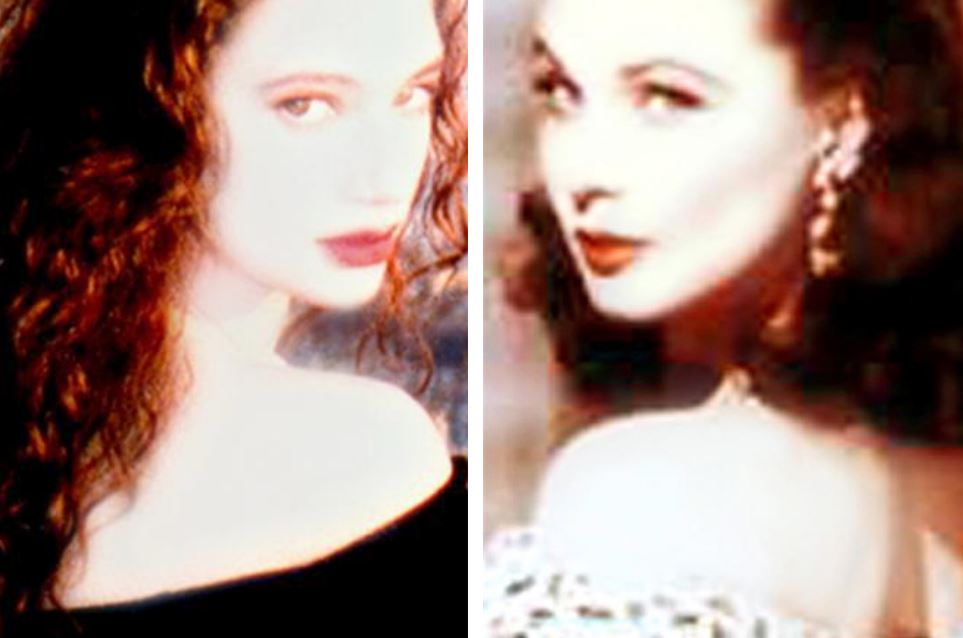
Visual resemblance is compelling and social‑media friendly, but it’s also error‑prone. If you do side‑by‑sides:
- Use public‑domain/Open Access portraits (NPG Open Access, LOC “Free to Use”). Attribute correctly. (Try the National Portrait Gallery)
- Document why the faces look similar (jawline, orbital spacing, philtrum, ear shape).
- Treat algorithmic face‑matching as exploratory only—not proof. Be aware of bias and error rates; frame results responsibly (e.g., “visual hypothesis for discussion”). (learn more at turing.ac.uk)
Beginner prompt:
“Suggest a visual comparison checklist for two portraits (structural features, micro‑asymmetries), and write me a caption that communicates hypothesis, not proof.”
Step 6 — Add intuition responsibly (the “inner research” lane)
Semkiw’s archive includes intuition‑supported matches and collaboration with Kevin Ryerson (who channels the spirit being ‘Ahtun Re’).
You can document intuitive leads—but always label them and pair them with verifiable steps (e.g., “Ahtun Re suggested X → we checked Y records”). (Learn Reincarnation Research)
Beginner prompt:
“Draft a two‑column note: Left column = intuitive leads; Right column = specific, non‑intuitive ways to test each lead (archives, maps, interviews).”
Step 7 — Score your case (and plan the next pass)
Have ChatGPT produce a scorecard:
| Principle | Current Evidence | Strength (0–10) | What We Still Need | Specific Next Steps |
|---|---|---|---|---|
| Memories | [child statements, dates, names] | 7 | independent witnesses | find neighbors/teachers |
| Birthmarks | [photos + medical note] | 6 | coroner/wound report analog | search local archives |
| Facial resemblance | [side‑by‑side + checklist] | 5 | more period portraits | NPG/LOC portrait drill |
| Talent continuity | [then vs now examples] | 4 | independent validation | biographies / newspaper clips |
| Xenoglossy | — | 0 | any language anomalies | interview family / therapist |
| Soul group | [role swaps?] | 3 | more relationships | family tree / FamilySearch |
This makes it obvious where to dig next. Beginner prompt:
“Using the evidence log below, update the scorecard and recommend the 3 highest‑value research actions that improve objective verification.”
Step 8 — Write the beginner‑level case post (with guardrails)
When you’re ready to publish, consider self-publishing wesbites like the ReincarnationForum.com community.
- Open with the human story (what the child/person said/did),
- Show the evidence (photos w/credits; public records; quotes from sources),
- Map each evidence item to a Semkiw principle,
- Present caveats (where the case is weak or still unverified),
- Invite community review (“Have similar memories? Share here.”)
Beginner prompt:
“Draft a 900–1,200 word case article with sections: Story, Evidence, How It Maps to the Principles, What We Still Don’t Know, How You Can Help.”
Cite good sources inside your story (ex: UVA DOPS summary page for children’s cases; Stevenson’s birthmark paper; xenoglossy monographs; Semkiw’s principles page).
Step 9 — A first research “sprint” you can do in a weekend
Sprint goal: Build a candidate short‑list with two independently verifiable lines of evidence.
Day 1 (2–3 hours):
- Draft your Case One‑Pager. (use Google Docs)
- Use Deep Research to pull 3 authoritative references related to your key claim (e.g., if it’s birthmarks, grab Stevenson/UVA links). (UVA School of Medicine)
- Find 2–3 open‑access portraits from the right era/region (NPG Open Access, LOC). (National Portrait Gallery)
Day 2 (2–3 hours):
- Run the Ten‑Point scorecard and generate a Top‑3 candidates list.
- Draft counter‑arguments and a plan to falsify weak matches.
- Start a 500‑word “pre‑case” note (internal only), so you have a record of how you got here.
That’s it. You’re moving.
Step 10 — Ethics, claims language, and minors
- Label hypotheses. Write “proposed match,” not “proof.”
- Guard minors. Use initials or blur details unless families consent; UVA’s approach emphasized careful documentation and verification, not sensationalism. (UVA School of Medicine)
- Image rights. Prefer Open Access/public domain; attribute clearly. (National Portrait Gallery)
- AI limits. Deep Research helps plan and find sources, but it can still be wrong. Validate every nontrivial claim in your post. (OpenAI Help Center)
Ready‑to‑use prompt pack (copy/paste)
A) Case One‑Pager
“Summarize the following notes into a one‑page case brief with sections: (1) memories (verbatim), (2) locations/time, (3) physical signs, (4) talents/behaviors, (5) relationships/soul‑group hints, (6) media links. End with a bullet list of open questions requiring external verification.”
B) Semkiw Principles Scorecard
“Using the brief above, evaluate against these principles: memories, factual matchability, physical signs (birthmarks/defects), facial architecture, talent/personality, phobias/behaviors, geographic memory, soul groups/relationship renewal, life‑plan/intermission clues, xenoglossy. Output a table with: Principle | What We Have | What’s Missing | 0–10 Score | Next Verification Step.”
C) Deep Research: Source Sweep
“Conduct a web sweep for (a) UVA Division of Perceptual Studies material relevant to [topic], (b) Stevenson papers on [topic], and (c) open‑access portrait repositories relevant to [era/region]. Return a bulleted list of links with a one‑line credential per source.” (UVA School of Medicine)
D) Counter‑Arguments
“List the best skeptical counter‑arguments against this proposed match (coincidence, incomplete records, observer bias). For each, propose a concrete test or dataset to falsify or reduce the concern.”
E) Visual Comparison Caption
“Write a 2–3 sentence caption for a side‑by‑side portrait that frames resemblance as hypothesis—not proof—and invites readers to compare structural features (jawline, orbitals, philtrum, ears).”
F) Publish‑Ready Draft
“Draft a 1,000‑word article with sections: Story, Evidence (with citations), How It Maps to the Principles, Open Questions, Contribute Your Memory. Use neutral, responsible claims language.”
Example: How the pieces fit (fictionalized mini‑walkthrough)
- Memory anchor: A parent notes their 3‑year‑old speaks about “rowing to the big light by the bridge” and fears deep water.
- Principle mapping: Memories + phobia → “Memories” and “Phobias” checks. Ask Deep Research for similar UVA‑documented patterns (e.g., death by drowning correlating with water phobias). (UVA School of Medicine)
- Geo clues: The family vacationed near a specific bridge in a country the child never visited. Ask Deep Research for historical incidents near that bridge ~X years before birth; log sources.
- Portraits: If a name emerges, search NPG/LOC for open‑access portraits of that individual; save images and rights notes. (National Portrait Gallery)
- Physical signs: If the child has a low‑back birthmark, consult Stevenson’s analyses on birthmark correlations to prior injuries; do not overstate—just document. (UVA School of Medicine)
- Score + iterate: Update the Ten‑Point table, identify the two biggest gaps (e.g., independent witness statements; school or military records), and run another Deep Research pass focused on those holes. (OpenAI Help Center)
Common mistakes beginners make (and how to avoid them)
- Mistake: Publishing on resemblance alone.
Fix: Always combine visual cues with at least one independent line: a verifiable memory detail or record. (Reincarnation Research) - Mistake: Treating AI results as proofs.
Fix: Deep Research is a lead generator. Cross‑check in primary sources (DOPS, archives, record sets). - Mistake: Forgetting bias in visual tools.
Fix: Note that automated face‑matching can mislead; disclose limits and avoid definitive language. (turing.ac.uk) - Mistake: Skipping permissions.
Fix: Stick to Open Access/public domain imagery and document usage terms. (National Portrait Gallery)
Where to learn more (starter links)
- Semkiw’s Principles / Cases (ReincarnationResearch.com)—overview pages, case categories, and background on intuitive validation work with Kevin Ryerson (Ahtun Re). (Reincarnation Research)
- UVA Division of Perceptual Studies—children’s memories overview; PDFs on birthmarks/defects and xenoglossy; Jim Tucker essays. (UVA School of Medicine)
- Deep Research (ChatGPT)—what it is and how it works. (OpenAI)
- Open‑Access Images—NPG/Smithsonian Open Access; Library of Congress collections; Wikimedia Commons pointers. (National Portrait Gallery)
Final word
Semkiw’s contribution wasn’t just compelling stories; it was a method: look for repeatable patterns and verifiable details across lives. AI—especially Deep Research—lets beginners adopt that rigor from day one. Use it to organize your thinking, widen your search, score your evidence, and most of all, ask better questions. The technology is an accelerator. The discernment is yours.
Make a one-time donation
Make a monthly donation
Make a yearly donation
Choose an amount
Or enter a custom amount
Your contribution is appreciated.
Your contribution is appreciated.
Your contribution is appreciated.
DonateDonate monthlyDonate yearlyScan the QR Code Below to Share to Other Devices:

 REIGNITE
Leave a comment